
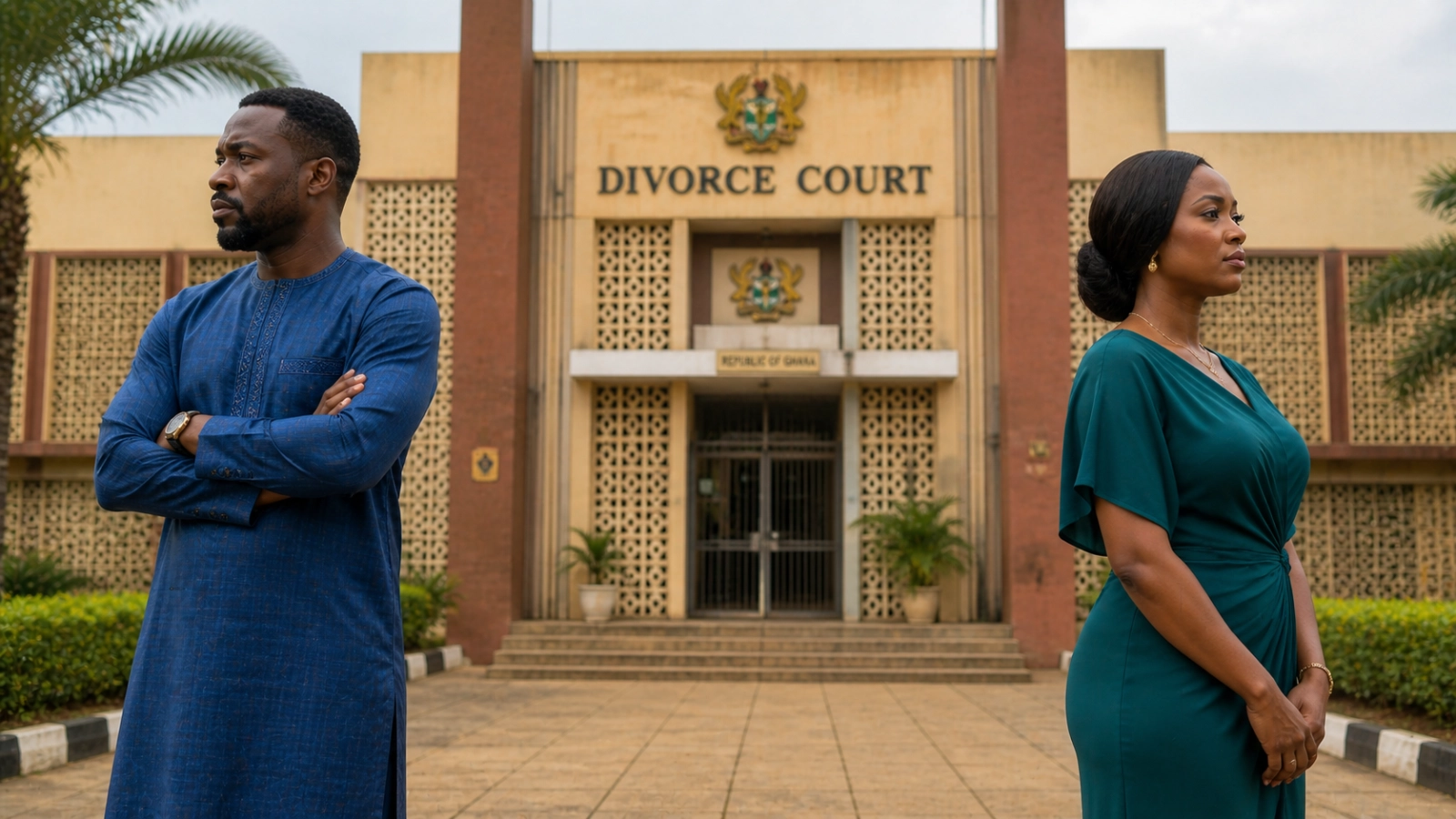
The Odartey Lamptey Case
In a widely reported Ghanaian divorce case, Nii Odartey Lamptey discovered that the children he had raised were not biologically his. A DNA test confirmed it. The issue then moved from the home into the courtroom. The case raised difficult legal and personal questions. It also brought public attention to how Ghana law treats paternity disputes.
Where a child is born during a marriage, the law generally recognises the husband as the father. This position supports family stability and protects the child. However, modern DNA testing can challenge that presumption. When this happens, the legal consequences are not always clear. Questions arise about maintenance, property division, and fairness between the parties. Does the deceiving spouse deserve any consideration at all?
The Odartey Lamptey case provides a useful example of how Ghanaian courts approach these issues. It shows how legal principles operate when biological truth conflicts with established family relationships. This article explains the case in simple terms. It focuses on the facts, the legal issues, and the court’s decision. It also highlights what the case may mean for similar disputes in Ghana.
This article is part 3 of a 3-part series:
- Part I: Paternity Fraud in Ghana – A New Criminal Offence?
- Part II: Mandatory Paternity Testing in Ghana
- Part III: Odartey Lamptey Case: Paternity Fraud & Divorce in Ghana (this article)
Background
Nii Odartey Lamptey and Gloria Appiah married in Accra on 28 May 1994 under the Marriage Ordinance. The husband was an internationally recognised footballer. He played for major European clubs and the Ghana national team. His career generated substantial income over many years. The wife assumed the role of homemaker. She managed the household and supported the family during the marriage. The relationship combined financial success with traditional family roles. Over time, the husband invested his earnings into property and business interests in Ghana.
The Marriage and the Children
The marriage lasted over twenty years. The couple lived across several countries, including Ghana, Belgium, the United Kingdom, Italy, and Holland. Three children were born during the marriage. They were raised as children of the marriage. The husband accepted full responsibility for their upbringing. He funded their education, healthcare, and general welfare. For many years, there was no legal dispute over their status. The family appeared stable from the outside. The legal position also reflected that stability. A child born during marriage is generally presumed to belong to the husband.
The Breakdown
The relationship began to deteriorate in the early 2010s. Disagreements increased between the parties. Tensions escalated over financial demands. The final straw was a dispute about school fees. The wife demanded that the eldest child attend a school in the UK. The cost was approximately £26,000 per year. Despite being a wealthy family, the husband did not think it was a wise decision at that particular time. Around the same time, both parties made serious allegations against each other. The wife alleged abuse, violence and adultery. The husband denied these claims. He also alleged infidelity. There were rumours that he had ignored/shut down in the past. Trust between the parties weakened significantly. The marriage reached a point where continued cohabitation became difficult.
The Divorce Proceedings
In 2013, the wife filed for divorce at the High Court in Accra. She later amended her petition. She claimed that the marriage had broken down beyond repair. The grounds were unreasonable behaviour in the form of violence and Adultery.
She demanded GHc500,000 as alimony. About GHc110,000+ as recovery of expenses she incurred for the family/household. She wanted the husband to continue maintaining the children. (this was before the DNA test). the wife also demanded 50% share in all marital assets mainly seven (7) bedroom mansion at east Legon, a four (4) bedroom house at Dome and an International School registered as a Company Limited. She relied on the classic principle that property acquired during marriage should be shared equally. She cited her domestic contributions as relevant contribution towards the acquisition of these assets.
The husband accepted that the marriage had broken down. However, he disputed the reasons for the breakdown. He also challenged all the claims. At this stage, the case followed a typical divorce pattern. The turning point came after the proceedings had begun.
DNA Dynamics and the Shift in the Case
During the dispute, the husband arranged DNA tests for the three children. The Husband later stated in media interviews, that the extreme and aggressive stance taken by his wife over the £26,000 school fees and certain rumours, stories and advice he had ignored or shut down in the past prompted him to do this. Either way the results were decisive. The tests showed that he was not the biological father of any of the three (3) children.
This discovery changed the direction of the case. It introduced a new factual and legal issue. The wife initially claimed maintenance for the children. However, that claim was later withdrawn. Despite this, she still demanded 50% share of the marital assets. Her basis was strong. She relied on her long period of domestic contribution as a housewife. Gloria Lamptey argued that the husband was infertile and had agreed with her to secretly be impregnated by other means including artificial insemination. She relied on the equal marital distribution principle. She relied on the principle that fault was a factor only in divorce and alimony but not for marital property sharing where equity was the overriding principle. Several other points were raised.
The husband opposed this position. He denied consenting for his wife to impregnated by other means let alone artificial insemination. The husband argued that he had spent substantial resources raising children who were not his. He contended that an equal division would be unjust in the circumstances. This would reward the wicked and egregious behaviour of his wife.
The facts of the case have been widely reported in Ghanaian media and are consistent with the court record.
High Court Findings and Decision
The High Court admitted the DNA evidence. It accepted that the husband was not the biological father of the children. The court found that the wife had engaged in adultery during the marriage. This finding affected how the court approached the financial issues.
The court considered the length of the marriage and the contributions of both parties. It also examined the financial consequences of the husband’s belief that the children were his. This had led him to provide the very best that he cold for them. Which he would not have done otherwise. The court rejected the claim for a strict 50% division of assets. It held that equality is not automatic. The law requires a just and equitable outcome.
Paternity Deceit or Fraud
While the Court did not find evidence of malicious fraud. The Court did hold that the wife’s conduct amounted to deceit. The High court saw a clear pattern. Three children were born during the marriage, and none belonged to the husband. This made it hard to argue that the wife was simply unsure. By having undisclosed affairs during those periods and still presenting the children as his, she allowed him to take on full responsibility. Even if she did not know for certain, she knew there was a real possibility they were not his. Choosing not to verify, while expecting him to act as a father, was treated as reckless. That pattern, together with her claim to a large share of the property, led the court to view the situation as deliberate concealment with real financial consequences, not just a mistake.
The Court also rejected her claim that the husband was infertile or that it was a consensual arrangement. The husband denied this and she could not produce any evidence to validate the claim.
A Holistic Decision
Despite this, the court still recognized that as a homemaker, she did provide value in the marriage even if it was overshadowed by her wickedness. The High Court balanced the value she provided against the wickedness of the paternity deceit. Essentially, while she was entitled to alimony, the man was also entitled to compensation for the 20+ years of value and effort put into the children. The Court could not grant full Alimony without granting full compensation. The solution was to grant a reduced Alimony.
Therefore, the High Court awarded the wife the four-bedroom house at Dome. It also awarded her two vehicles and GH¢200,000. The husband retained the East Legon matrimonial mansion. He also retained ownership of the business assets including the International School. The high ourt refused to include company property and other properties in the marital distribution. The Court said the company was a separate legal entity and the court could not take its assets in a matrimonial dispute.
The Court of Appeal Decision
The wife appealed the High Court decision. She challenged both the findings and the distribution of property. The Court of Appeal reviewed the evidence and the legal principles applied. It upheld the High Court’s decision in full. The court confirmed that DNA evidence could establish non-paternity on a balance of probabilities. It also upheld the finding of adultery.
The appellate court clarified that “equality is equity” is not an automatic rule. It depends on the facts of each case. The court agreed that the financial consequences of the case justified a departure from equal division. It also affirmed that company assets remain separate from personal property.
Aftermath and Final Enforcement
After the appeal, further minor disputes arose over possession of the East Legon property. The wife remained adamant despite the High Court and the Court of Appeal ruling against her. She refused to leave the East Legon mansion. This led to additional applications and enforcement steps. She filed several review applications. However, the courts consistently upheld the earlier decisions. Further applications to revisit the property issues were also refused.
Eventually, a final order required the wife to vacate the property. The husband regained possession in sometime 2024 after several years of litigation. The case came to a practical end after enforcement of the court’s orders.
What This Means for Ghana Law
This decision confirms that Ghana courts prioritise fairness over strict equality in divorce. It also shows that DNA evidence, financial conduct, and legal structure can significantly influence outcomes.
DNA Evidence and the Presumption of Paternity
Traditionally, Ghana law applies the presumption of legitimacy. A child born during a valid marriage is presumed to belong to the husband. This rule promotes family stability and protects the child.
The case shows that DNA evidence can rebut this presumption. The court accepted scientific testing as decisive proof of non-paternity. This reflects a shift in how courts evaluate paternity disputes. Once DNA excludes the husband, the legal position changes. The burden may shift to the opposing party to provide an alternative explanation. In practice, this is difficult to establish.
The decision therefore strengthens the role of scientific evidence in family law. It confirms that biological reality can override long-standing legal assumptions. However, courts will still assess each case on its facts.
Paternity Misrepresentation and Property Distribution
The case draws a clear distinction between ordinary marital misconduct and conduct with financial consequences. Courts do not usually adjust property division based on minor wrongdoing.
However, this case involved long-term paternity misrepresentation. The husband incurred substantial financial obligations over many years. These included costs of upbringing, education, and welfare. The court treated this as a significant factor in assessing fairness. It did not treat the matter as punishment. Instead, it recognised the financial impact of the conduct. This approach affects how the “equality is equity” principle is applied. Equal division is not automatic. Courts may adjust outcomes where one party’s actions caused measurable financial loss.
At the same time, domestic contributions remain relevant. The court still awarded property and financial support to the wife. The law seeks balance, not exclusion.
Corporate Veil and Marital Property
The case also clarifies the treatment of corporate assets in divorce. The court confirmed that a company is a separate legal entity. Its assets do not automatically form part of marital property.
Even where one spouse controls the company, the legal structure remains relevant. Courts will respect the distinction between personal and corporate ownership. The court refused to include the school’s assets in the marital distribution. It held that those assets belonged to the company, not the individual. This reinforces the strength of the corporate veil in Ghana law. It will only be set aside in exceptional circumstances. Clear evidence of misuse or fraud is required.
The decision provides practical guidance for asset structuring. Properly established companies can offer a level of protection in divorce proceedings.
Closing Perspective
The case shows that misrepresentation, if established, can influence financial outcomes. It may affect how a court views fairness between the parties. This can shape decisions on property and financial distribution.
However, the court does not treat these cases as claims for punishment. The focus remains on achieving a just outcome. The court considers the entire relationship, not a single event. This approach reflects caution in the law. Allegations of fraud require clear proof. Courts will not make such findings lightly. The burden remains on the party making the allegation. The case therefore sits within a broader legal discussion. Questions of paternity fraud may arise in both criminal and civil contexts. Each has its own legal requirements and consequences.
This case illustrates how law responds when trust within a marriage breaks down. The court did not treat the dispute as a purely emotional matter. It approached the case through legal principles and evidence. DNA testing provided clarity where uncertainty once existed. At the same time, the court did not ignore the history of the relationship. It recognised that the marriage lasted over two decades. It also acknowledged the domestic role played during that period. The decision reflects a careful balance. It avoids rigid formulas and instead focuses on fairness. This approach allows the court to respond to unusual and difficult facts. The case also highlights the limits of legal presumptions. The presumption of legitimacy remains important. However, it can be displaced by clear scientific evidence.
More broadly, the decision shows that Ghana family law is evolving. Courts are increasingly required to address issues created by modern technology. DNA testing will continue to shape future disputes.
Positioning
Family law disputes often involve complex facts and significant financial consequences. This is especially true where paternity is disputed. The outcome of a case may depend on evidence, timing, and how issues are presented before the court. Decisions taken early can affect the final result. Where DNA testing, property claims, or maintenance issues arise, it is important to understand your legal position. Each case must be assessed on its own facts.
If you are dealing with a paternity or divorce-related issue, or any legal matter at all, it is important to engage a qualified lawyer for legal advice before taking any major decision.
Sources and References
The legal analysis is based primarily on the Court of Appeal decision and applicable Ghana law. The facts are drawn from the court judgment and publicly available reports, including:
- MyJoyOnline — The full story about Odartey Lamptey, his ex-wife, infidelity and fight over property
- CitiNewsroom — Court throws out Odartey Lamptey’s ex-wife’s 2nd appeal for 7-bedroom mansion
- Graphic Online — I’ve been renting for 8 years while my ex-wife still occupies my house — Odartey Lamptey
- Gloria Odartey Lamptey v. Nii Odartey Lamptey (Court of Appeal Judgment, 2021)
- Cindy Ohui Duordoe — The Trajectory of Equitable Distribution of Matrimonial Property in Ghana: What is New? (UGSLJ, 2022)
- Patricia A. Vitoh — When the Corporate Veil Hides the Matrimonial Estate: A Case for Legal Reform in Ghana (Journal of African Law, 2026)
Next Step
Did you enjoy this article? Continue with Part One or read Part Two. You may also select what to do next from one of the options below.



One Response
Thanks for sharing.interesting case.