

Inheritance Property Distribution in Ghana
There are two (2) main methods of inheritance property distribution in Ghana. Through a Last Will & Testament and in accordance with the intestate succession law, PNDCLaw 111.
You can purchase a copy of the PNDCLaw 111 here.
This post will only explain the distribution structure under PNDCLaw 111 and the persons who are entitled to inherit. Only the Spouse, Child, Parent and Extended Family have an automatic right to share in the estate of a deceased. All other persons will be required to prove their right to share in the estate.
Who Can Inherit?
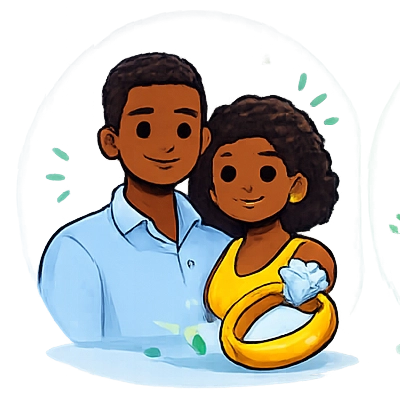
Surviving Spouse
The legally married wife or husband of the deceased.

Surviving Child
The biological and adopted children of the deceased.
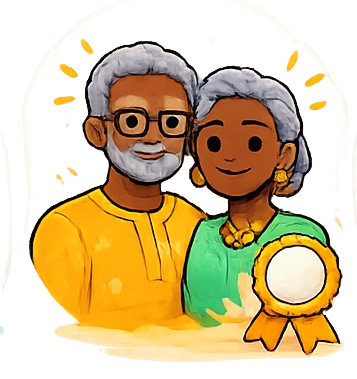
Surviving Parent
The biological or adoptive parents of the deceased.
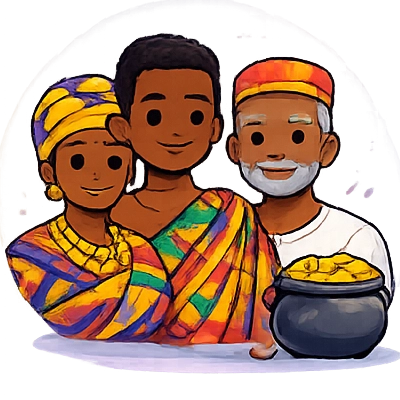
Customary Law
The extended family of the deceased.
Who Gets the House and the Personal Belongings?
Personal belongings – (Household chattel) These belong to the surviving spouse and the children. These are essentially anything in the home belonging to the deceased that is movable and not fixed to the property. This includes items like furniture, appliances, electronics, clothing, jewellery, and any other personal belongings.
A Single House – Where the deceased left only one house, then it belongs to the surviving spouse or child or both of them. This means where there is only one house left by the deceased, if there is a spouse and no child, then it belongs to the spouse. If there is a child and no spouse, then it is for the child and where there is both spouse and child, then it is for both of them.
Multiple Houses – Where the deceased left more than one house, then the spouse or child or both of them may choose one of the houses for themselves before the rest will be shared. If they cannot agree on which one of the houses to choose, then the Administrator can bring the dispute to the Court and the Court will make that choice for them. After the single house has been given to or selected by the spouse and child, the remainder of the estate is described as the “Residue”.
Where Spouse and Children Survive
In addition to the one (1) house and personal belongings, the surviving spouse and children receive the largest share of the estate.
Spouse
Jointly entitled with children
Children
Jointly entitled with spouse
Parents
Out of the residue estate
Customary Family
Distributed by tradition
Where Only Spouse Survives
Spouse
Receives the largest share
Parents
Of the residue estate
Customary Family
Distributed by tradition
Where Only the Children Survive
Children
Jointly entitled with spouse
Parents
Of the residue estate
Customary Family
Distributed by tradition
Where Only the Parents Survive
Parents
Of the residue estate
Customary Family
Distributed by tradition
Can Grandchildren Inherit Under PNDCLaw 111?
Grandchildren will only qualify if their parent (surviving child of the grandparent) predeceased the grandparent and the grandchildren were dependent on the grandparent during the grandparent’s lifetime. (i.e. Grandchildren were known by the deceased grandparent and if the deceased grandparent was taking care of them or maintaining them).
How Can Grandchildren Inherit Under PNDCLaw 111?
Grandchildren do not automatically inherit. They only step into the shoes of their parent if specific timeline and dependency conditions are met.
A: Parent dies first
Parent (Abena)
Died 2005
Grandparent (Kofi)
Died 2007
Grandchild (Kwame)
Alive
B: Grandparent dies first
Grandparent (Kofi)
Died 2005
Parent (Abena)
Died 2007 or Alive
Grandchild (Kwame)
Alive
Additional Condition: Dependency
Dependency Link
Was the Grandchild dependent on the grandparent? Did the grandparent maintain and take care of the grandchild during their lifetime?
✓ IF YES = Qualifies
The grandchild steps into their deceased parent’s shoes and inherits their portion.
✕ IF NO = Disqualified
If there was no dependency or maintenance provided, the grandchild cannot inherit.
Legal Warning
Criminal Offences Under PNDCLaw 111
Violating the provisions of PNDCLaw 111 is a serious matter. The following acts are strict criminal offences punishable by a fine, imprisonment, or both.
1. Intermeddling
Handling property without Court Authority: It is a crime to handle, deal with, or distribute the property of a deceased person without first obtaining Letters of Administration or Probate.
Interfering with Beneficiaries: It is also a criminal offence to interfere with the right of the spouse, children, or any lawful beneficiary from enjoying the benefits of the property granted to them by law.
2. Unlawful Ejection
It is a criminal offence to eject a surviving spouse and/or child from their matrimonial home (the house they lived in with the deceased during their lifetime) before the estate is legally distributed. No one has the right to eject a spouse and/or child from the matrimonial home before the distribution of the estate
Lawful Ejection Process
- Rented Home: The Landlord may only eject them by obtaining a valid Court Order.
- Family Property: The extended family may only eject them after six (6) months from the date of death.
- Public/Government Housing: They may only be ejected after three (3) months from the date of death.
Next Steps: Secure Your Inheritance Rights
Now that you understand the PNDCLaw 111, next step is to learn how to obtain Letters of Administration in Ghana.
Need Specific Legal Guidance? The information provided in this guide is for educational purposes and does not constitute legal advice. Because inheritance laws can be complex and highly specific to your family’s circumstances, we strongly recommend consulting a qualified lawyer before making any major decisions.
You may:
154 responses
There is situation where application was filed at the court for lettes of administration in respect of the deceased estate. In the affidavit of both the applicants and the head of family, it was stated that the deceased at the time of his death had two wives and seven children. Based on this the court granted the letters of administration to the two widows who applied as administrators. Now, it’s time to share the property and the family is saying that the deceased had another two wives which the administrator dispute and this stalling the sharing of the property.
1. What is the legal effect of the administrators compromise and allow these two other women to join in the sharing should there be a legal challenge for the administrators to account?
2. What happened if the administrators insist that only beneficiaries as presented to the court will be entitled to the sharing?
3. What of if the family and some of the children decide not to take part in the sharing, what will the administrators do with their share of estate?
Question 2
There is a lady the deceased marry but divorced her before his demise but after the death, the senior brother of the deceased brought her back to the matrimonial home to stay even though she was no longer the deceased wife before his death. Can the administrators get her out of the house? If so how can they do that?
You need to engage a lawyer as soon as possible since your question requires direct legal advice.
Hi Lexis, my grandfather died and willed his property to his two children. My dad later passed without them legally sharing the property. Does the full property now belong to his surviving sibling or we the children of my dad also have a claim in the property?
Please note that we cannot give you legal advice on this platform, we can only educate and help you to understand what the law says about a given subject. The current ownership of the property will depend on the devises in the Will. The Testator should have stated how it should be dealt with, if it is not expressly stated in the Will, then the law will apply the default position.
Thank you sir/madam for this.
Our dad died without a will and we the surviving children are 6. Unfortunately our mum too is late. Our father left a company and a house behind. My father’s brothers are
on my neck for my dad’s death certificate since I am the first child even though we are done with his burial. I fear what they might use it for so I have kept it away from them.
1. Who has the right to keep our father’s death certificate
2. What risks are involved when I give the death certificate to his brothers?
We have sent you an email. Please note that we cannot give you legal advice on this platform, we can only help you to understand what the law says about a given subject. Where a person dies without a Will, the estate is shared under PNDCLaw 111. Under PNDCLaw 111, if there is one house, it belongs to the wife and children. The rest of the properties will be shared as follows, Spouse-18.65% | Children-56.25% | Parent-12.5% | Family-12.5%. It is a criminal offence to handle the estate of a deceased without first obtaining LA.
My boyfriend is a Ghanaian and has a partner in Ghana with whom he has two children.
I live abroad and I’m American. I’m pregnant and plan to have two more children with him as well. If he marries us both through Islam can both wives legally inherit 25% each intestate? Is traditional marriage enough or do we have to go to legally register?
Please note that we cannot give you legal advice on this platform, we can only educate and help you to understand what the law says about a given subject. The Ghana law recognizes Islamic traditional Marriage as a valid legal marriage. Registration is not necessary to prove the validity or legality of the marriage but a registration certificate may prove the existence of the marriage. In Ghana where a person dies intestate, the estate is shared under PNDCLaw 111. Under PNDCLaw 111, the spouses and children will all share 75%, the surviving parent (if any) will get 12.5%, and the remaining 12.5% will be shared under customary law/Islamic law. If there are no surviving parents, then that portion is added to the portion shared under Islamic Law.
Thank you for such a thorough and great response.
My Dad died intestate but had some of his properties placed in my name and my junior brother’s name. He stayed with my mother for 30 years, but they were not legally married, and now the properties bearing his names, I wanted to know if the intestate law is applied, would it affect the ones in our names or it will only affect the ones in my father’s name. Also wanted to know if the law would consider the woman she stayed with for 30 years but were not legally married.
Please note that we cannot give you legal advice on this platform. We can only educate and help you to understand what the law says about a given subject. Only the properties that belonged to the deceased (are in the name of the deceased) will be considered part of the estate. Only the legally married spouse will be considered a surviving spouse. In some rare cases concubines have also been considered as legal spouses but you will need your lawyer to advise you on whether your situation qualifies.
My dad gave my grandmother money to purchase a plot of land. She used her name as the owner in the documentation process. She passed away leaving my dad and her younger son (my uncle) without changing the ownership name into my dad’s name. Now, my uncle’s (my dad’s younger brother) family are claiming that, my grandmother came to them and informed them she had bought a plot of land for them and she intends my dad to build a house for them using one of our family’s business. Mean while the plot of land belongs to my dad ,though it’s in my grandmother’s name and he used his hard-earned money to raise a building on the land. Now the other family wants ownership of the land and their only evidence is they claim my grandmother told them she had bought it for them. According to the law, how would it deal with such a case?
Please note that we cannot give you legal advice on this platform, we can only educate and help you to understand what the law says about a given subject. Anybody who claims to be the true owner of a property which is in the name of a deceased person will have the obligation to prove that they are the true owner. The one making that claim will have to present sufficient evidence to prove that even though the property is in the name of the deceased, the ownership is still with the claimant. The owner of the land is the owner of every permanent thing (building, farms etc,) that is on the land. So any building constructed on family land is family property. The one who built the building will only have a lifetime interest in it. After their death, it will revert to the family.